Tuesday, May 22, 2012

Monday, May 21, 2012

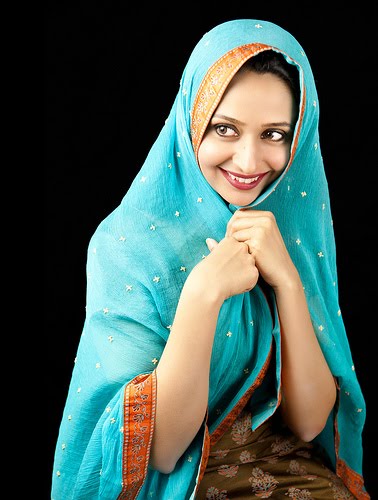
Beauty of Islam for Girls


The unification of both genders validates the notion of equality in Islam, and I just find that so powerful. Its so apparent that people tend to excerpt a command from Allah directed at someone in specific and use that claim onto someone else. 
And lastly, where is it that Allah addresses the women of humanity in this chapter? In ayah 59
Ya ayuhan nabiyu qul leeazwajika, wa banatika, wa nis’a il mumineen, yudneena a’layhin min jalabeebihin..
O Prophet! Tell your wives, your daughters, and the women of the believers to draw their veils over their bodies
SubhanAllah; notice how Allah advises Muhammad to first practice this concept in his home, then his outward home (his family members, Ali, Fatima, etc), then towards his community. And Allah doesn’t direct Muhammad to tell the entire universe of women to dress in physical modesty, but to the women of the believers. What does the women of the believers mean? It means you do not address these women directly, but speak to those whom she is close to in order to carry out this order (for a lack of a better term). 
Sisters, please understand this concept of perspective in Islam. 
Allah gave you an ultimate choice to understand this as you please, and that’s why I sincerely believe that Muhammad did not have specific tafseer of the Quran. I believe that Quran is open to every time period of every century and upon every human being. Grasp this Quran with full sincerity, and understand it as Allah has molded you to innately understand it. 


Therefore, what follows is a reminder for my sisters in Islam. It is a reminder of the true status of these so-called beautiful women. It is a reminder of the excellence of the women who wear Hijaab. 

Excellent Qualities of Those who Wear Hijaab
It is well known that the Muslim woman is a creature of modesty. Allaah loves for our Muslim women to be shielded by their Hijaab. It is their outer protection from the decadence of this life. Allaah's Messenger  sallallaahu  `alayhi  wa  sallam ( may  Allaah exalt his mention ) , said: "Allaah is modest and covering. He loves modesty and privacy." [Abu Daawood, An-Nasaa'i Al-Bayhaqi, Ahmad].

Thus, as modesty is a quality that is loved by Allaah, our sisters must take comfort in knowing that they are modest and that they are not like those women who show themselves off to the world. Such women will not be shielded from Allaah's Wrath. Allaah's Messenger  sallallaahu  `alayhi  wa  sallam ( may  Allaah exalt his mention ) said:"Any woman who takes off her clothes in other than her husband's home, has broken Allaah's shield upon her." [Abu Daawood and At-Tirmithi) 

Therefore, we see that the Hijaab of the Muslim woman is indeed part of modesty. Modesty accompanies Eemaan (faith). That is why Allaah's Messenger  sallallaahu  `alayhi  wa  sallam ( may  Allaah exalt his mention ) said: "Modesty is part of Eemaan and Eemaan is in Paradise." [At-Tirmithi]. Also: "Modesty and Eemaan are companions, when one goes away the other one goes away."  [Al-Haakim and others] 

The Muslim women must know that the disbelieving women who beautify themselves for the world to see possess no modesty, thus, they are void of any Eemaan. Instead of looking to the latest fashion models for guidance, you must look to the wives of the Prophet  sallallaahu  `alayhi  wa  sallam ( may  Allaah exalt his mention )

Look at the regard for modesty that our mother, 'Aa'ishah  may  Allaah  be  pleased  with  herpossessed even in the presence of the deceased; she said: "I used to enter the room where the Messenger of Allaah  sallallaahu  `alayhi  wa  sallam ( may  Allaah exalt his mention ) and my father (Abu Bakr)  may  Allaah  be  pleased  with  him were later buried in without having my garment on me, saying it is only my husband and my father. But when 'Umar bin al-Khattaab  may  Allaah  be  pleased  with  him was later buried in (the same place), I did not enter the room except that I had my garment on being shy from 'Umar."

It can be quite difficult for the Muslim woman to go out wearing Hijaab in a society that mocks and torments her. Indeed, she may feel strange and out of place. However, if she knows the status of those who are mocked by the disbelievers, then she would continue to wear her Hijaab with dignity. 

Allaah Says in His Book (what means): "Verily! The criminals used to laugh at those who believed. And whenever they passed them, used to wink at one another. And when they returned to their own people, they would return jesting. When they saw them, they said: 'These have indeed gone astray!' But they (disbelievers, sinners) had not been sent as watchers over them (the believers). But on this Day those who believe will laugh at the disbelievers. On (high) thrones, looking (at all things). Are not the disbelievers paid (fully) for what they used to do?"
[Quran 83:29-36] 

Allaah's Words should serve as a support for you my dear sister. Also, take comfort in being a stranger among these lewd and sinful women. Allaah's Messenger  sallallaahu  `alayhi  wa  sallam ( may  Allaah exalt his mention ) said (what means): "Islam began as something strange, and it would revert to its (old position) of being strange, so good news is for the strangers." [Muslim] 

The Characteristics of the Exposed Women: 
Instead of practicing the Hijaab (covering), the disbelieving women expose themselves, making a dazzling display of themselves for others. Such a display is an attribute of ignorance. Allaah Says in His Book (what means): "And stay in your houses and do not display yourselves as you used to during the times of ignorance." [Quran 33:33] 

Allaah's Messenger  sallallaahu  `alayhi  wa  sallam ( may  Allaah exalt his mention ) said: "The best of your women is the affectionate, the fertile, the comforting, the agreeable -- if they fear Allaah. The most evil of your women are those who expose and display themselves, and those who strut (to show off) and they are the hypocrites. Those who enter al-Jannah (the Paradise) are like the red beaked crow." [Al-Bayhaqi]. The simile of the red-beaked crow is to show that those who enter Paradise will be as rare as this kind crow is rare. 

We see from the above Aayah and Hadeeth that displaying oneself is indeed unlawful. Further, it is a quality of the most evil of women! Therefore, do not be envious of the disbelieving women. They only have this life to enjoy, while the believing women will have Paradise. There is nothing in your Hijaab to be ashamed of, as it is the garment of the righteous and pious female worshippers of Allaah. 

In order to truly show you how evil those women who expose themselves are, let us ponder over the following statement of Allaah's Messenger  sallallaahu  `alayhi  wa  sallam ( may  Allaah exalt his mention ) : "Of the people of Hell there are two whom I have never seen, the one possessing whips like the tail of an ox and they flog people with them. The second one, women who would be naked in spite of their being dressed, who are seduced (to wrong paths) and seduce others. Their hair is high like the humps of the camel. These women would not enter Paradise, nor will they smell its fragrance, although its fragrance can be sensed from such and such a distance."[Muslim] 

These women who expose themselves are common among us today. These are women that even the Prophet  sallallaahu  `alayhi  wa  sallam ( may  Allaah exalt his mention ) did not see! Look around you and you will see those women who are clothed but naked! Look at the hairstyles of the women who expose themselves -- are they not high like the camel's hump? 

Perhaps we are the first generation since the time of Aadam  may  Allaah  exalt  his  mention to witness such women. If one ponders over photos taken thirty to fifty years ago, one will see that the disbelieving women did not expose themselves in the manner that their offspring do today! These women are among the people of the Fire! Thus, how can you envy them? 

Such lewd women will not even smell the fragrance of Paradise; so our women must avoid their path. 

Another lesson from the above hadeeth is that it confirms that what the Prophet  came with is indeed the truth! This is a prophecy that has come to pass in front of our very eyes. Hence, will we continue to envy these evil women, or should we be grateful to our Lord for the Hijaab, which brings modesty, which leads to Paradise

To sum up, the Muslim woman should abandon all of the ways of the exposed women, and adopt the ways of those who are modest through their love and practice of the proper Islamic Hijaab. 


 beauty, islam , tips , teaching , life , advise ,hijab , swimming pool , dressing, modesty


Beauty of Muslim Women

A number of words have been used in the Quran to explain the dress code and conduct expected of a Muslim woman. Hijab or “pardah” as we call it, is not only a covering or outer garb but also the kind of conduct and intention that should accompany it. Yet the presence of only a good intention is not sufficient without any action to verify that intention. You can perhaps vouch about your own purity of thought (which is also disliked by Allah because no one can claim to be free from sin) but how can you vouch for the intentions of the hundreds of men you choose to walk amongst? Intention is important but not sufficient by itself for repeatedly Allah says: “Those who believed and performed good actions.” Hence, actions must accompany intention and in the following ayahs, Allah Ta’ala has stated certain specific actions that He wishes us to do.


1- Surah An-Nur: 31 states: “And tell the believing women to lower their gaze and protect their private parts and not to show off their adornment except that which is apparent and to draw their khumur over their juyub and not to reveal their adornment except to their husband’s fathers, or their sons or their husband’s sons, or their brothers or their brother’s sons, or their sister’s sons, or their women, or the slaves whom their right hands possess, or old male servants who lack vigour, or small children who have no sense of feminine sex.”

The word ‘Khumur’(plural of khimar) is used for a head cover in Arabic. Alcohol is also called khamr because it overcomes or covers up the senses of a person. Before Islam, women would tuck this head dress behind their ears and throw its ends over their shoulders to leave their ears, necks and bosoms uncovered. So it was clearly ordained here to extend the head dress (or scarf or dupatta) over the bosoms so they serve their actual purpose of covering a woman’s attraction.

Then women are explicitly told about the people before whom they may reveal their adornment. It is vital to pause here and think, “What was the need of mentioning every mahram by name if there was going to be no difference in the woman’s attire before them and everyone else?”

Not only the clothes but even the manner of walking should not be provocative or such that it draws attention to the women. “And let them not stamp their feet so as to reveal what they hide of their adornment. And all of you beg Allah to forgive you all, O believers, that you may be successful.” (An-Nur; 31)
We, on the contrary, act against these commands and then except Allah to forgive us.
Men and women have both being asked to lower or restrict stray glances, not because the face is uncovered or covered but also to avoid eye contact or avoid seeing any haram (unlawful) thing that can open the door to many vices. 


Eyes are windows to the soul and betray many an emotion; therefore controlling their unbridled usage was one of the steps to prevent unlawful relationships. Purdah was another step in the same direction.

We need to then think about how the shariah (Islamic law), which is full of wisdom, could command the covering of the head and bosom, the lowering of certain gazes and a dignified walk but allow the face to remain uncovered? The face is where the main attraction of a woman lies. It is on the beautification of her face that the woman spends thousands of rupees, the face that attracts men and the face that is used in advertisements to promote many products.


2-In Surah Al-Ahzab: 53, it is clearly stated that the wives of the Prophet SAW are not allowed to remarry and if male strangers have any important thing to ask for, they should do so from behind a partition. Allah says: “That is purer for your hearts and for their hearts.” Hence certain actions are necessary to preserve the purity of the heart. Allah Ta’ala is our Creator and is closer to us than our jugular vein. He knows the thoughts that arise in us even before we can realize them. He knows better what precautions and rules to make to save humanity from disaster.

In spite of being Mothers of the faithful and role models for us, the wives of the Prophet SAW have been given strict rules of conduct and attire. If these pious ladies have been ordered thus, where should we place ourselves?

3-In Surah Al-Ahzab: 59, Allah Ta’ala ordains “O Prophet! Tell your wives and your daughters and the women of the believers to draw their jilbabs (cloaks) all over themselves. That will be better, that they should be known (as free respectable women) so as to not be annoyed. And Allah is Ever-Forgiving, Most Merciful.

The word ‘jilbab’ refers to an outer garment to be worn over the khimar and clothes when going out of the house. Beyond the security of the house, this dress will hide a Muslim woman’s adornment (face, body, clothes and jewellery) and also act as a mark of distinction to prevent any wrong advances. Here, it is not the face that is meant to be a mark of recognition for any individual because this meaning would be inconsistent with the context and meaning of the rest of the ayah. Rather it is this attire that will help a woman be recognized as a Muslim woman about whom no evil hopes can be harboured.

To say that this order was for the olden days when such a need for security existed is a farce because are we implying that the time of Prophet SAW was worse than the corrupt and crime-ridden society of today? Are women more secure from threats to their person and honour today, or are cases of rape and sexual harassment on the rise in all parts of the world? Has the human nature changed with time? The answers are clear.

The word ‘ala’(upon) signifies that this cloak must be hung from above a person so as to cover the face, body and clothes and not hung from the shoulders, etc. The form and design of the jilbab is not mentioned but rather left up to the conditions of each country or climate.

The Quran cannot be completely understood without ahadith and we must see how the initial and foremost recipients of this Divine Message acted upon it. We see that the wives of the Prophet SAW and the sahabiat had no hesitation in covering their faces and bodies when such an order came from their Lord. Hadhrat Aisha RA relates in context to the incident of slander against her: “I kept sitting there and dozed off. Meanwhile a man, Safwan bin Muattal Aslami came to the place and saw me sleeping. He recognized me immediately because he had seen me before the commandment for hijab came. He recited ‘Inna lillahi wa inna ilaihi raajioon’. So I woke up and covered my face with my jilbab.” (Bukhari)

Hence, though the word ‘face’ or ‘naqab’ may not be mentioned in the Quran in context to hijab, but it is mentioned in ahadith (like the hadith about not wearing naqab during Hajj). The test may be to see who submits to Allah’s commands as well as the Messenger’s SAW Sunnah.

An exception to this rule is when a man wishes to see the woman he is going to marry. This is allowed and recommended and this special permission shows that it is not possible to see the woman otherwise.
Old women who have no desire or produce no desire for marriage in others have been allowed to shed their outer clothes, which proves that the wearing of jilbab is necessary for young, marriageable women. Even for the old, Allah says, “But to refrain (not to discard their outer clothing) is better for them.” (An-Nur: 60)

As far as leaving the face uncovered during Hajj (or namaz) is concerned, this is not necessarily applicable for the rest of our life too. Acts of worship have special requirements that are not practiced otherwise. We do not wear the ihram (2 sheets of cloth) in our daily life, nor do we observe the various restrictions of ihram except on the occasion of Hajj, we do not abstain from food or intercourse everyday from dawn till dusk like we do in Ramadan. So how can we make an exceptional act like uncovering the face a rule for the rest of our life?

On the other hand the command to abstain from using naqab (sewn cloth for covering face) during Hajj proves the fact that it is necessary otherwise or there would have been no need to stop women from wearing it on Hajj. Infact it is not forbidden to cover the face with an unsewn cloth for women on Hajj. Hazrat Aisha narrates, “Men on camels used to pass by us while we were with the Prophet SAW and in the state of ihram. We would cover our faces with our jilbabs when they passed by us and then uncover them again.” (Abu Dawud, Ibn Majah)

This attire is not a hindrance but rather a blessing for the Muslim woman. If an entire nation can go around wearing masks to save themselves from catching the SARS disease, why can’t Muslim women do so to save themselves from other kinds of social ills? If a surgeon can perform the most delicate of tasks covered from head to toe, wearing a mask, why must a Muslim woman’s sight, hearing or breathing be obstructed by a cloth? Hijab is not a means of blackening the faces of women and reducing them to mere objects! Rather it is the culture of obscenity that is making women mere objects of attraction and a feast for the eyes.

Does keeping a pearl within a cover or a diamond in a safe place decrease its worth? Rather it increases it. It is when the woman’s outer appearance is hidden from public display that her inner qualities of intellect, wisdom and knowledge shine through.


Whenever the women of Jannah are mentioned in the Quran, their quality of being hidden and preserved is also mentioned which further enhances their beauty. They have been called Azwajun Muttahharat (purified wives) and Lulu-el-Maknoon (Pearls kept hidden). Allah Ta’ala says: “And beside them will be Qasirat-at-Tarf (ones with lowered, restrained eyes) with wide and beautiful eyes. (Delicate and pure) as if they were (hidden) eggs (well) preserved.” (As-Saffat: 48-49)

If we desire to be amongst these women in the gardens of Paradise, we will have to develop these qualities within ourselves from this world onwards to become one of the Hidden Pearls.


    beauty, girl , islam , Quran , fashion ,wallpapers , tips

Sunday, May 20, 2012

Hairstyle Ideas for a quick change

It’s so easy to get stuck in a rut when it comes to hair styling. Your hair cut obviously plays a large part in how you wear your hair but when if you’re bored then here are some hair styling tips to try out.    


Short Hair’PUNKY 
For those with short hairstyles- when your hair is almost dry, work through some boosting, lifting mousse into your roots. A good hair product to use is Nicky Clarke Lift, Thicken and Shine. Use a crimping iron (yes a crimping iron) on small sections of your hair. Hairspray is one of the greatest hair products to set your hairstyle with no matter what the style or length.
 Medium Length Hair’QUIFF 
Medium length hairstyles are fun to play around with, sometimes the length can be a bit ‘ in the middle of nowhere- and it’s easy to wear it the same way all the time. But don’t do that! Add some oomph into your medium locks with this hairstyle. Hair products to use here are volumising mousse and Label M Resurrection Style Dust. Use three large rollers on the front section of your hair and blast with hairspray; L’Oreal has some of the best hair products for hairspray. Blast the section with your hair dryer, pin your hair at the back of the quiff and spritz Toni and Guy Shine mist over the rest of the hairstyle.
Longer Hair- PLAITED 
Long hairstyles allow for experimentation because there’s so much hair there to play with! Now plaited hairstyles aren’t just for 6 year old girls in the school playground. Surprisingly a plaited hairstyle can look very chic, especially this year’ when the plait has made a comeback. Plaits should be side parted with some messiness. Run serum through your hair and pull your hair low to one side of your neck. This hairstyle works well in a normal plait and a fishtail plait (a little harder to achieve on your own). Make sure the front part of this hairstyle is messier and loose. Don’t sleek the hairstyle down from the side parting. Secure and spritz with hairspray and a distant blast from the hair dryer to set your hair in place.

                hair style , style , girl , beauty , tips 


Thursday, May 17, 2012

Wallpapers of Rachel Dunn


              girl , star , celebrity , style , hot shot

World Famous Kim


Kimberly Noel "KimKardashian(born October 21, 1980) is an American socialite,celebutante, television personality, model, actress and businesswoman. She is known for starring in Keeping Up with the Kardashians, the E! reality series that she shares with her family, and its spin-offs including Kourtney and Kim Take New York.
Prior to the development of her career as a reality television star, Kardashian gained notoriety as the subject of a sex tape that subsequently resulted in a court awarding her $5 million. She has been involved in the production of several lines of clothing and fragrances


                wallpapers , model , kim , style , sex

Wednesday, May 16, 2012

Latest Hot Style Casual Dresses


Hot Style Casual Dresses
Casual Dresses, Lawn Prints , Fashion , Girl , tips , wallpapers , baby, model, style